Why local AI models are the ultimate off-grid tactical asset

Excerpt: Running small language models natively on a laptop to preserve intelligence access when internet vectors disappear. Core Content: True emergency preparedness means retaining access to critical knowledge databases without an active internet line. Running local, lightweight AI weights—like Phi-3 or Llama-3—natively via an offline core engine gives operators instant, off-grid access to medical protocols, safety guides, and raw data filtering. By utilizing hardware co-processing, your operations notebook becomes a highly intelligent tactical assistant that consumes minimal power while keeping your data entirely local and private.

Read More

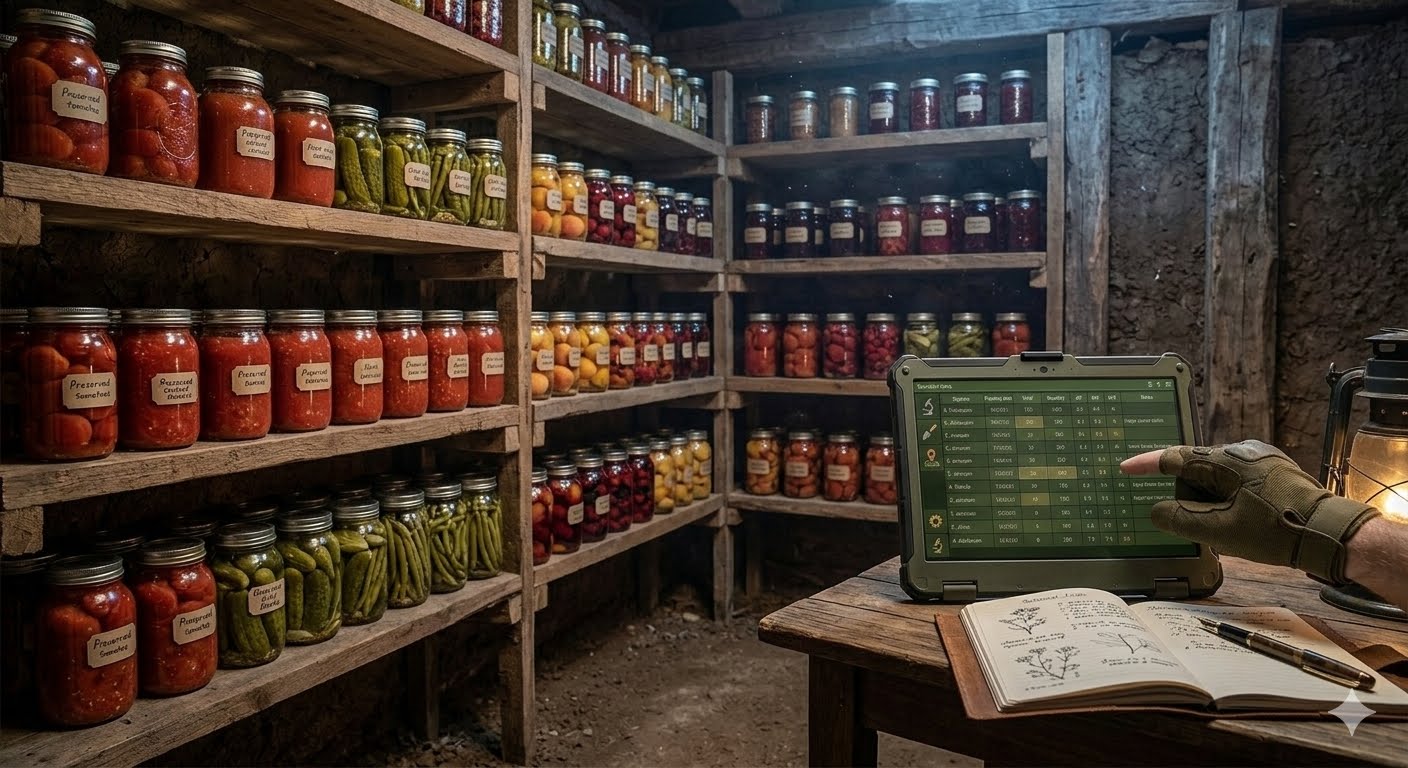
The Sovereign Botanical Matrix: Tracking Multi-Year Homestead Yields

Excerpt: Moving past paper charts. How digital rotation schedules and preservation timelines protect your family’s food stores. Core Content: Maximizing crop production require rigorous timeline logging. Operators must catalog seed varieties, track soil amendment cycles, and monitor pest pressures interactively. More importantly, post-harvest calculations must factor in distinct preservation limits—whether utilizing pressure canning, vinegar curing, or deep freeze setups. Maintaining a digital database cache guarantees your tactical food shelf-life parameters remain highly accurate, allowing seamless inventory rotations before critical shortages manifest.

Read More

How to Establish an Off-Grid Communications Command Center

Excerpt: Why reliance on central network infrastructure fails during grid-down scenarios, and how decentralized localized nodes restore area communications. Core Content: When regional cellular grids collapse, tactical operators must pivot instantly to local radio layers. By combining direct hardware tools like the JS8Call mesh engine, GQRX spectrum tracking, and localized LoRa transceiver nodes, standard neighborhoods can spin up immediate tactical text grids. The Fortress Command architecture bridges the gap between raw hardware frequencies and user-friendly visual interfaces, keeping team deployment coordinates structured completely off the grid.

Read More

Step-by-Step Node Deployment: Terminal Installation Manual

Core Content Blocks (Write this like an airtight checklist): Step 1: Boot an Ubuntu Desktop machine and install Docker Engine natively. Step 2: Execute our automated dependency installer commands inside the app window to deploy CHIRP, FLDIGI, JS8Call, and Ollama with a single desktop click. Step 3: Mount the physical storage pathways (~/Desktop/FORTRESS/storage/) to ingest your local mapping layers, offline ZIM encyclopedias, and audio tracking clips flawlessly.

Read More

Recommend Hardware Procurement Guide

The SDR Receiver: Recommend the RTL-SDR Blog V4 USB Dongle. Explain how it feeds live radio spectra straight into the GQRX waterfall container. The LoRa Mesh: Recommend Heltec V3 or T-Beam (915 MHz for US / 868 MHz for EU) nodes running Meshtastic. Detail how the app’s background listener pulls text traffic straight off the airwaves [CH]. The Server Core: Recommend a low-power Mini PC or Raspberry Pi 5 tucked into a solar battery cabinet to run the headless background Docker containers (Navidrome, Kiwix, MeTube) 24/7, leaving the operator’s primary…

Read More

FORTRESS COMMAND: The Open-Source, Off-Grid Base Management Operating Suite

The Problem: Modern tactical software is either locked behind military clearance or dependencies that crash instantly when cellular networks drop. The Solution: A unified, local-first architecture built entirely in Rust and Tauri v2 that runs 100% disconnected from the cloud. The Visual Feature Callout Grid: Signals Intelligence: Integrated RF line-of-sight calculators, azimuth solvers, and over-the-air SSTV image decoders. Logistics Matrix: Persistent multi-year supply ledgers, propane/fuel calculation matrices, and crop preservation rotators. Local Intelligence: An internal asynchronous AES-256 Crypto key-splitter alongside a 100% offline AI co-processor prompt terminal.

Read More